
On South African construction and industrial sites, the Health and Safety File is the evidence that a contractor has planned its work safely before anyone picks up a tool. The requirement comes from the Construction Regulations, 2014, issued under the Occupational Health and Safety Act 85 of 1993. A weak file is one of the most common reasons a contractor is held at the gate on mobilisation day.
Who asks for it
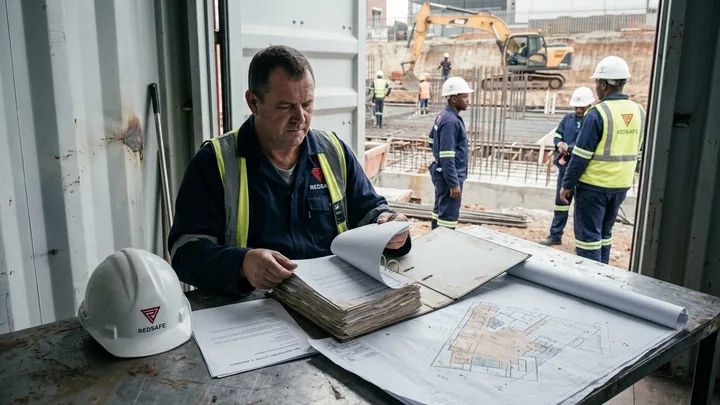
The regulations set out a chain of responsibility. The client prepares a baseline risk assessment and a health and safety specification. The principal contractor develops a health and safety plan that responds to that specification and opens a Health and Safety File. Each contractor below the principal contractor does the same for its own scope. The client (or its agent) must approve the plan and audit it during the work.
The documents that are usually checked first
Every client's specification is different, but the core of a contractor's file tends to look like this:
- Health and safety plan specific to the scope, site and programme, not a generic company manual
- Appointment letters for the statutory roles the work requires, with proof of competence
- Baseline and task-specific risk assessments, with the method statements and safe work procedures that control the identified hazards
- Letter of good standing with the Compensation Fund (COIDA) or a licensed mutual association
- Training records and medical fitness certificates for each worker going on site
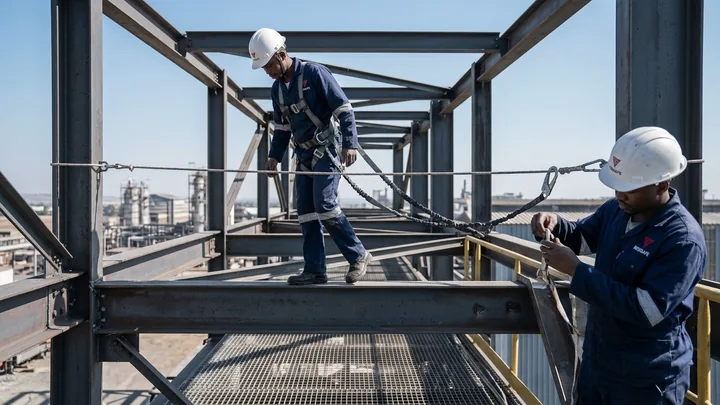
- Fall protection plan where people work at height, prepared by a competent person
- Lifting operations: lifting plans, inspection records for lifting machinery and tackle, and operator competence
- Equipment registers and inspection checklists, including hand tools, electrical equipment and fire extinguishers
- Emergency preparedness: emergency contacts, first-aid arrangements and evacuation procedures
- Incident reporting and investigation procedure
Construction work permits
On larger projects the client must also apply to the Department of Employment and Labour for a construction work permit before work starts. The trigger in the regulations is linked to the project's duration and person-days, or to its value relative to the CIDB grading thresholds. The permit number must then be displayed on site. Contractors should confirm early whether the project they are joining carries a permit.
Where files usually fail
The common problems are not missing templates. They are generic risk assessments that do not mention the actual task, appointments without evidence of competence, expired medicals or training, and plans that do not match the client's specification. An auditor reads the file against the specification line by line.
How Redsafe approaches it
Redsafe's HSE management service prepares site-specific risk assessments, HSE files and management systems for its own scopes and for clients' contractors, and places HSE officers on site. Redsafe's safety personnel are SACPCMO-registered and NEBOSH-qualified, and the business is ISO 45001 certified.
If your project needs a file built, reviewed or brought up to a client's specification, send us the specification and scope.
This article is general guidance, not legal advice. Always work from the current regulations and the client's health and safety specification.