
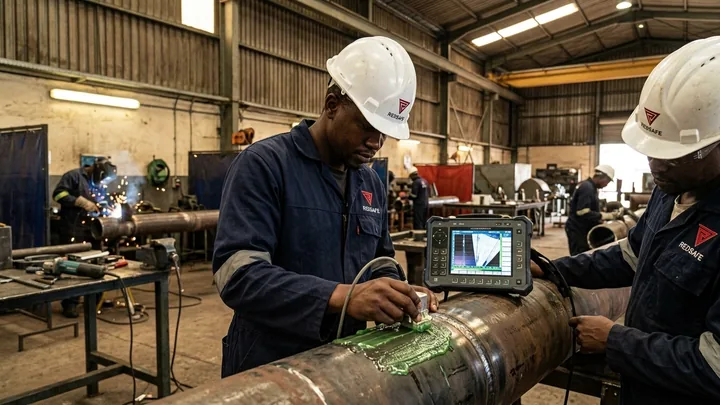
NDT for welded steel and piping: VT, PT, MT, UT and RT compared
The five common non-destructive testing methods for welds, what each finds, where each is used, and how NDT extent is specified.
Read the articlePractical articles on fabrication, piping, shutdowns, lifting, fire protection and construction health and safety in South Africa, written for engineers, buyers and HSE practitioners.
The five common non-destructive testing methods for welds, what each finds, where each is used, and how NDT extent is specified.
Read the article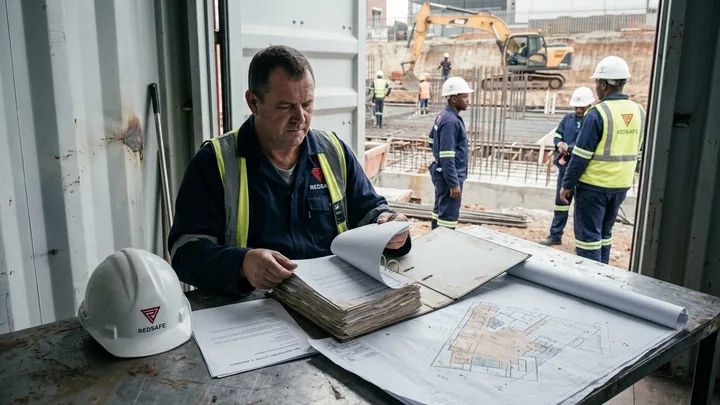
A practical checklist of the Health and Safety File documents South African clients and principal contractors expect under the Construction Regulations, 2014.

What a diameter-inch is, how DI is counted for butt welds, branches and socket welds, and how contractors use it to price, plan and track piping work.

How to estimate welding man-hours for piping and structural steel: productivity norms, correction factors, operator factor and the deposition-rate method.

Estimate welding consumables from joint geometry: weld cross-section, weld metal mass, deposition efficiency by process, shielding gas and electrode storage.

How to plan a mobile crane lift: calculating total lifted load, reading the load chart, utilisation limits, tandem lifts, wind and what a lift plan contains.

How to check ground bearing pressure under mobile crane outriggers: outrigger loads, kN and kPa conversions, mat sizing, ground hazards and mat materials.

What EN 10204 type 2.2, 3.1 and 3.2 inspection documents certify, who signs them, what to check on a mill test certificate and how heat numbers stay traceable.

How positive material identification works, the difference between XRF and OES, when PMI is specified, how much to sample and what a PMI record should include.

How South Africa's Pressure Equipment Regulations work, how SANS 347 categorises equipment and where the Approved Inspection Authority (AIA) is involved.

Why welds need preheat, interpass control and post-weld heat treatment, how temperatures are measured and recorded, and how codes set PWHT requirements.

How iron contamination and heat tint undermine stainless steel, and the segregation, purging, pickling, passivation and ferroxyl test practices that control it.

How to assemble bolted flange joints in line with ASME PCC-1: gasket handling, face inspection, lubrication, torque or tensioning, patterns and joint records.

How to align pump and motor shafts: offset and angularity, soft foot and pipe strain checks, thermal growth, dial versus laser methods and typical tolerances.

How to install pumps, fans and compressors on concrete: foundation checks, anchor bolts, levelling, cementitious or epoxy grout, curing and post-grout checks.

What goes into conveyor gantries, trestles, stringers and transfer chutes: idler alignment, liner selection, trial assembly, shutdown tie-ins and safe access.
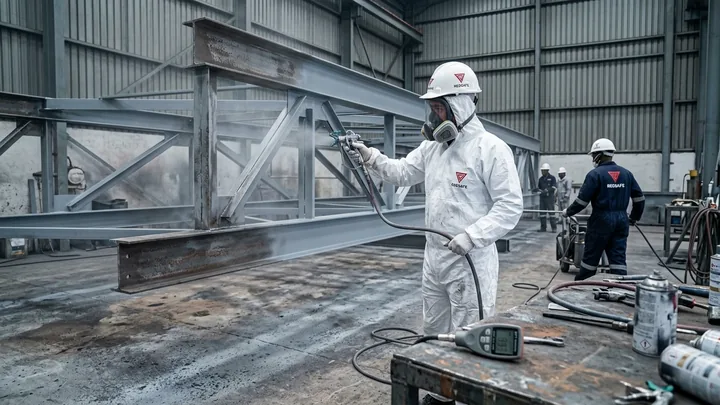
How to specify corrosion protection for structural steel: ISO 12944 categories and durability, Sa 2½ blasting, DFT checks, galvanising and paint quantities.
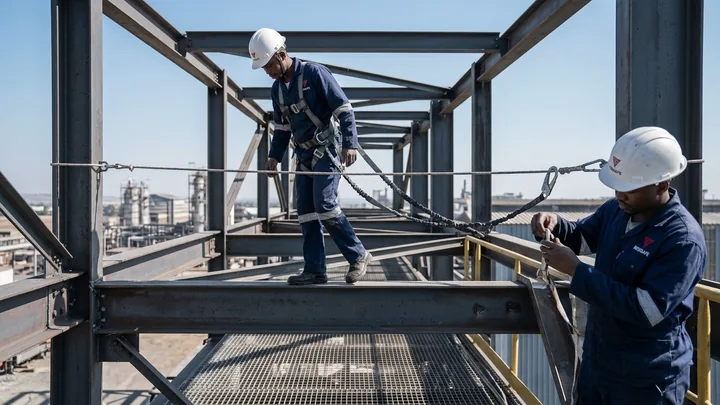
What a fall protection plan under the Construction Regulations 2014 must contain: risk assessment, control hierarchy, rescue, equipment, fitness, scaffolds.

How permit-to-work and lockout/tagout control work on live plants: permit types, isolation and the try step, group lockboxes, shift handover and close-out.

A practical guide to industrial incident investigation: immediate actions, reporting, evidence, interviews, root cause methods and lasting corrective action.
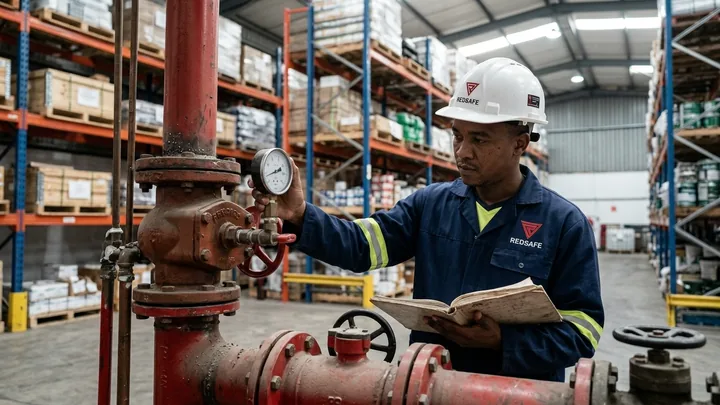
What owners must keep up on automatic sprinkler systems: routine checks, valve supervision, pump and alarm tests, obstructions, impairment control and records.

A checklist for prequalifying an industrial contractor in South Africa: compliance documents, ISO scope, HSE record, quality, insurance and capacity.

How hydrostatic and pneumatic leak tests are specified for process piping under ASME B31.3, how test pressure is calculated and what the record must contain.
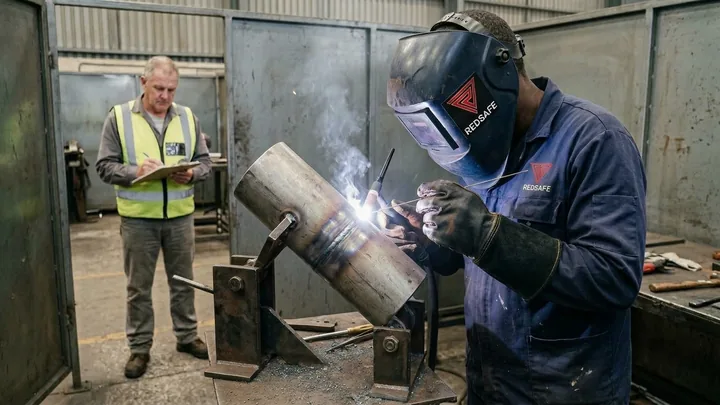
What 'coded welder' actually means, how a WPS and PQR work together, and the welding records a client should expect on pressure and structural work.
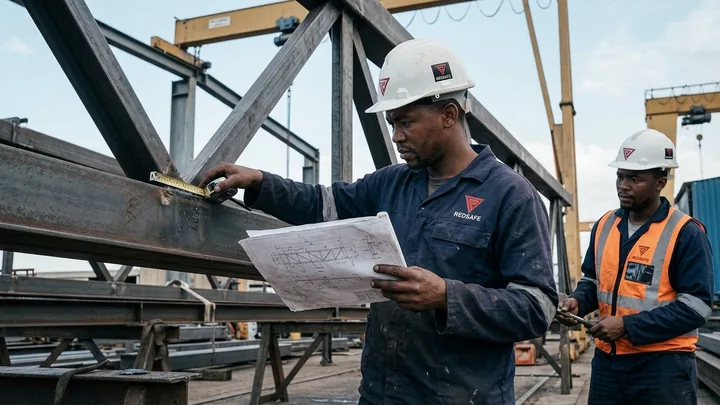
What to put in a structural steel enquiry, the standards SA fabrication is built to, and the quality records to ask for before steel leaves the workshop.
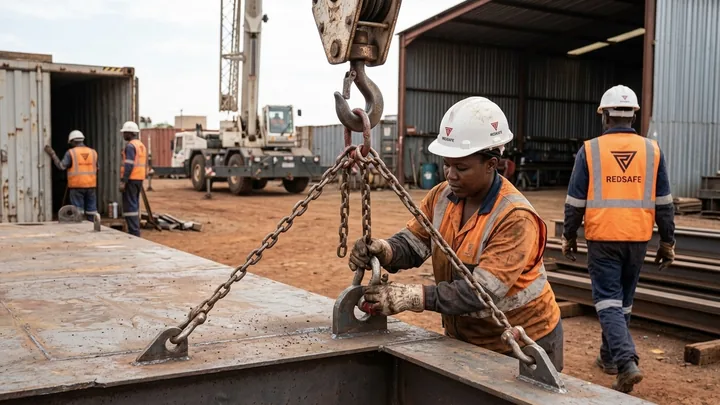
How sling angle changes the load in each leg of a multi-leg sling, with worked examples, and the South African regulations that govern lifting equipment.

A contractor's view of shutdown and turnaround planning: scope freeze, pre-fabrication, permits, isolations, shift structure and handover.

What the SACPCMO construction health and safety categories mean, why clients ask for them, and how to check a registration before appointing someone.

How the main automatic sprinkler system types work, where each is used in industrial facilities, and the standards South African installations are designed to.

Drawings, a bill of quantities or a description of the problem. An engineer reviews every enquiry and comes back to you directly.